- Vintage
- 2023
- Grapes
- Riesling
- Alcohol
- 12.0% vol
- Soil
- limestone & calcareous clay
- Elevation
- 230–260 m
- Farming
- sustainable, hand harvest
- Harvest
- by hand, mid-October
- Fermentation
- steel, cool
- Ageing
- 6 months on fine lees
- Production
- 4,000 bottles
- Serve
- 9–11 °C
- Cellar
- 4–10 years
Tasting
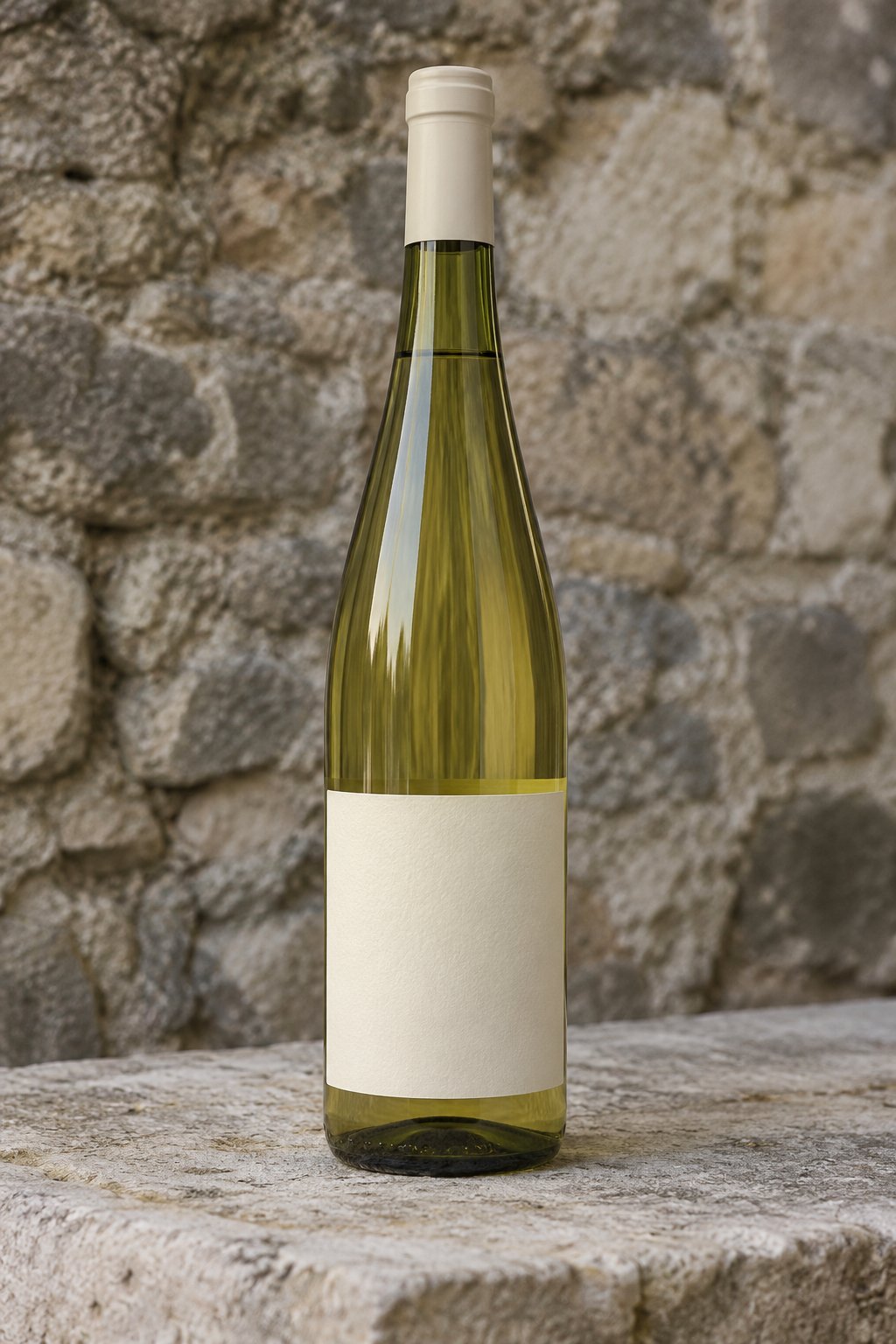
Wapień means limestone, and the wine is built around it. Pale lemon-green. Green apple, lemon peel, white peach and a chalky, almost dusty note. Lean, tight and very dry, with high acidity and a long finish that tastes of stone. Six months on fine lees give it a little texture. It is closed when first opened and better on the second day, and it should keep for a decade.
Food
Pike-perch with dill butter, Cold roast pork, White asparagus
Why does it taste like this?
Descend one layer at a time.
Grape · Riesling
Rhine white. Poland's leading vinifera; lime, precision, petrol with age.
Soil · limestone & calcareous clay
Limestone & calcareous clay: Cool roots, high natural acidity, saline length, slow ripening. Tension and mineral grip.
Vineyard · Górna TerasaGórna Terasa, the upper terrace: the thinnest soil over Jurassic limestone, and the latest-ripening rows.
Winnica Srebrna Góra.
Region · Kraków Jura
The Vistula and the Jura uplands around Kraków: Jurassic limestone, loess and clay, and white-led vineyards, among them Srebrna Góra below the Camaldolese monastery.
Climate · transitional oceanic–continental
Transitional oceanic–continental, EU zone A; growing season 180–230 days, 1,400–1,900 sunshine hours, 450–650 mm rain in the lowlands.
- Latitude
- ≈ 50.1° N
History · c.1600 BC to Today
- c.1600 BC
- Baltic amber reaches the Mediterranean; the road exists
- 1st c.
- Roman Carnuntum, Pannonia, Aquileia; vines along the Danube
- 966
- Christianisation; Bull of Gniezno records Polish vineyards
- 1136
- 1136 · The Bull of Gniezno
- 1250
- Cistercians at Paradyż; medieval peak near 4,000 ha
- 1513
- Little Ice Age frosts; the long cooling
- 1826–60s
- Grempler Sekt; Grünberg's 1,400 ha
- 1900
- Phylloxera; Moravia falls to 3,800 ha
- 1945
- Borders redrawn twice; Grünberg becomes Zielona Góra
- 1982
- Jasło, hobbyists, EU accession, the 2008 law
- 2008
- 2008 · The wine law
- Today
- 673 growers in Poland; the first PDO in process
See where this wine comes from
Bottle → producer → vineyard → region → country → Central Europe