About · why this road
The ancient road from the Baltic to the Adriatic, followed to a bottle.
The Amber Road, from the Baltic to the Adriatic, station by station:
- Gdańsk · the Baltic amber coast
- Toruń · the Vistula
- Kalisz · Calisia
- Krapkowice · Oder crossing
- Moravian Gate
- Carnuntum · the Danube (today Petronell-Carnuntum)
- Savaria (today Szombathely)
- Poetovio (today Ptuj)
- Emona (today Ljubljana)
- Aquileia · the Adriatic
Roman-era route, 1st–2nd c. AD · after Wielowiejski
Route sources: Uni Klagenfurt; amber.com.pl; J. Wielowiejski, Główny szlak bursztynowy w czasach Cesarstwa Rzymskiego (Wrocław, 1980). The line is a schematic reconstruction, not a surveyed road.
Why Central Europe
Because the map has a hole in it.
Open most wine lists and Europe ends at Vienna. East and north of it lie 170,000 hectares of vineyard, grape varieties nobody outside the region can pronounce, and a history that runs from Roman Carnuntum through Cistercian cellars, Habsburg Sekt houses and collectivised cooperatives to the small estates farming those same slopes today.
We think that hole is the most interesting place in European wine right now, and that Poland, cool, undecided and growing fast, is the right place to start walking.
Why these producers
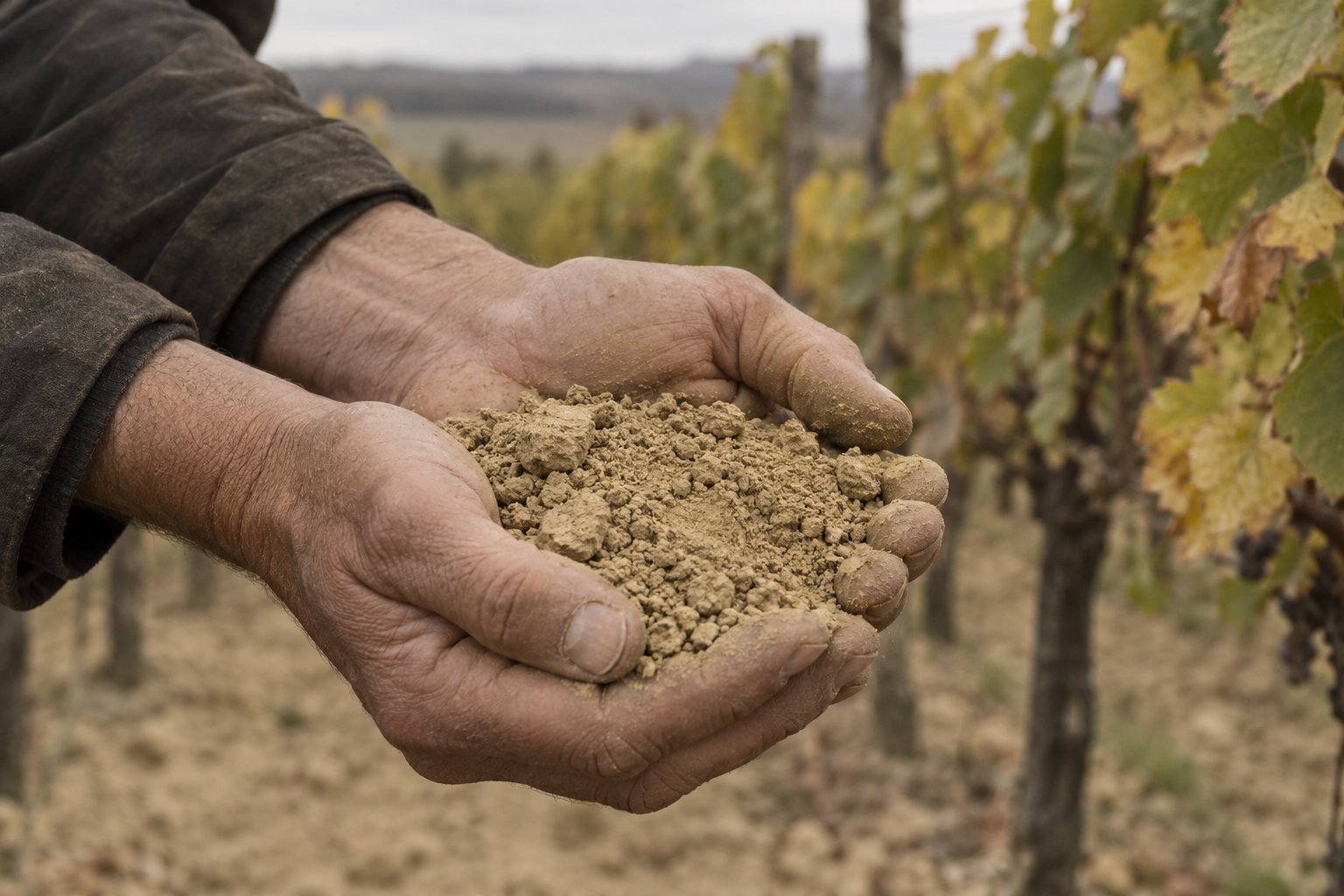
A slope, a soil, a cool season, a person.
We look for estate-grown wines with a reason to taste the way they do. Small scale, farming first, a sense of place you can point to on a map, a person we can name, and wines we would drink at our own table. Six principles, applied slowly.
- Estate-grown, from vines the producer farms
- Small enough that one person can taste every tank
- Farming before cellar; organic or on the way there
- A place you can find in the atlas
- A person whose name goes on the page
- Wines we would drink, not wines we could sell
Why the name
Amber went south. We go north.
For two thousand years Baltic amber travelled down the Vistula and the Oder, through the Moravian Gate, to Carnuntum on the Danube and on to Aquileia on the Adriatic. It was reaching the Mediterranean by the sixteenth century BC; the Romans ran the road as a trade route at its peak in the first and second centuries. Vines grew along most of it, and Carnuntum is still a wine appellation.
The name is a promise about method: follow an old road, pay attention to the places along it, and bring back what you find.
The founder
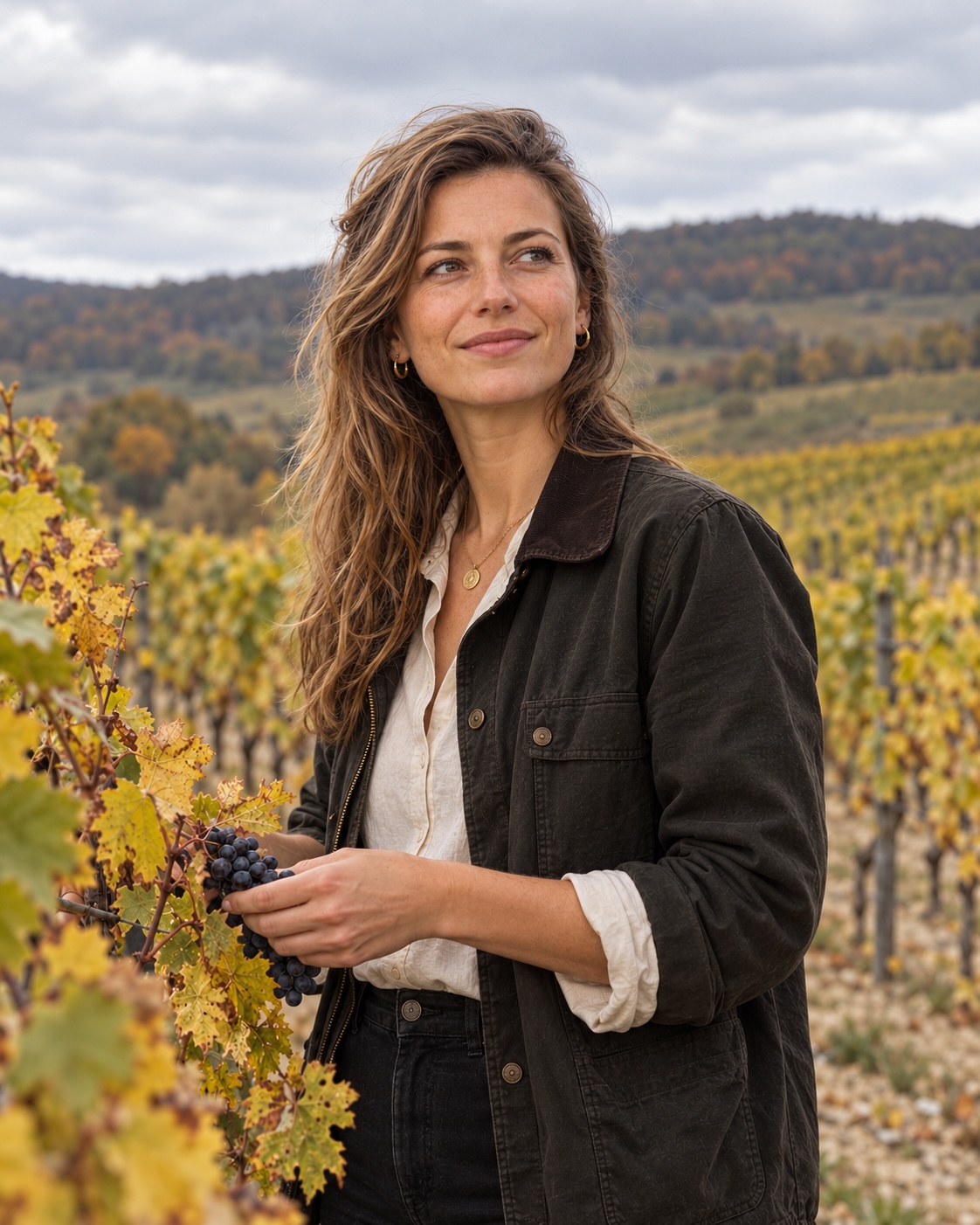
Nora Ellis, sommelier.
Nora Ellis spent twelve years on restaurant floors in San Francisco: first as a server, then on the floor as a sommelier, and for the last five years running a wine list of about four hundred bottles. The work taught her what a list is for. It is a set of reasons to try something, and every bottle on it should have one.
The first Polish wine she tasted was a Riesling from Lower Silesia, poured blind by a visiting distributor at a staff tasting. Nobody at the table placed it. Some guessed the Mosel, some guessed Austria; nobody said Poland. A year later she drove from Gdańsk to Kraków in harvest week, and came back with a notebook of growers and a plan.
Amber Road is that plan. Nora works from San Francisco and travels the road at least twice a year. She looks for growers who farm their own vines, keep their estates small enough to know every row, and can tell you why their wine tastes the way it does. If she would not open it at her own table, it does not come back with her.