Grape · 3 min · 14 September 2026
What cool-climate Polish Pinot Noir tastes like
Red cherry, raspberry, a line of acidity, and about 100 hectares of it across 120 wineries.
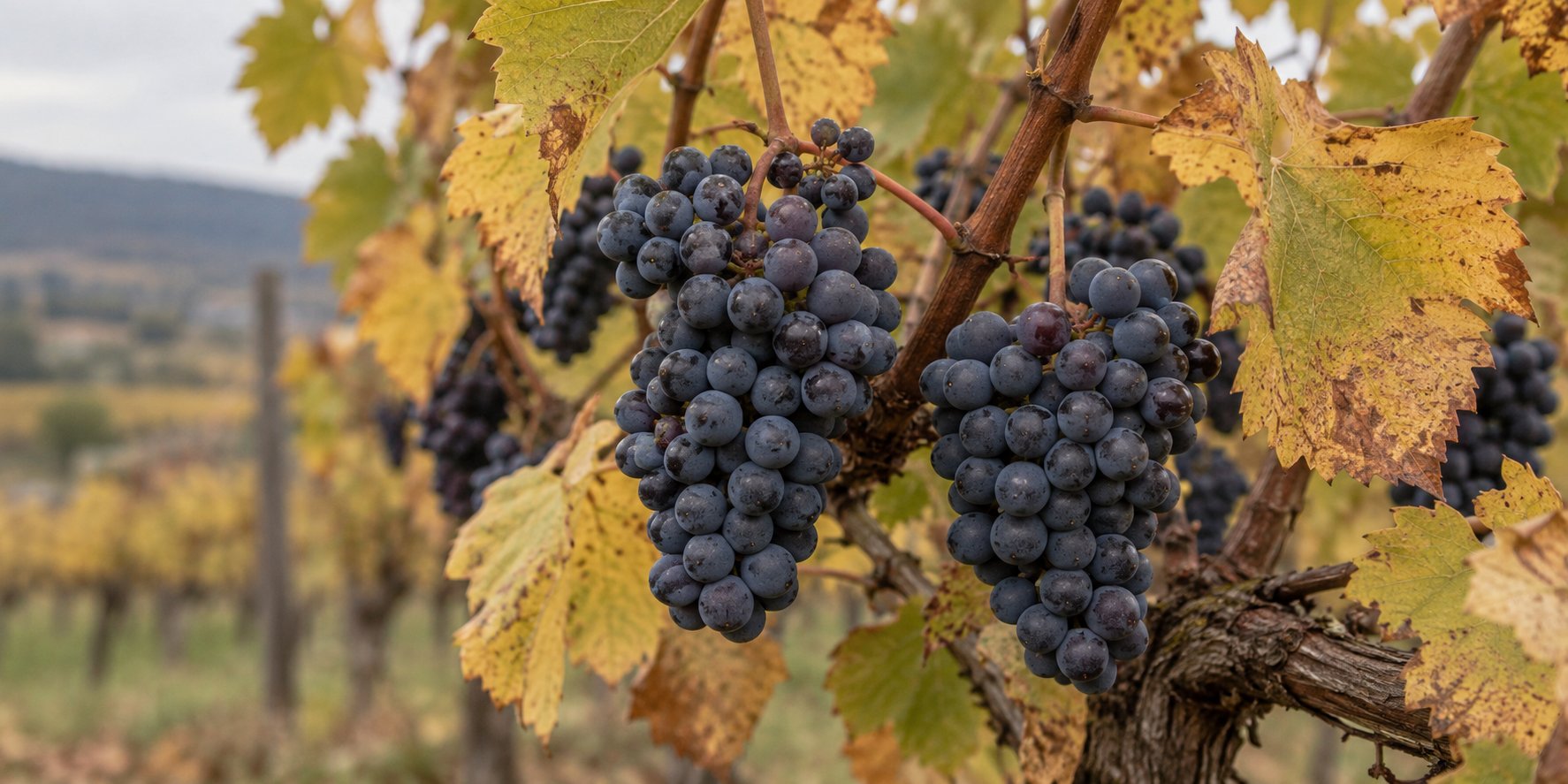
Pinot Noir came late to Poland and has moved quickly. It is now the most-planted red grape in the country, on about 100 hectares across 120 wineries. That is a small area for the red grape of Burgundy, and a large one for a country where four in five vines are still hybrids.
Start with the glass. Polish Pinot Noir is pale, often paler than people expect. The fruit is red rather than black: red cherry first, then raspberry. Tannin is gentle. What holds the wine together is acidity, a long, clean line that runs from the first sip to the finish and leaves the mouth watering. In weight and mood these wines sit closer to the reds of the Loire or Beaujolais than to anything further south. They are light and fragrant, and they make their case quietly. A glass poured next to a bigger red will seem slight for a minute, and then it will seem like the only one on the table that is still interesting.
The reason is the season. Polish vineyards lie between the 49th and 53rd parallels, in a transitional climate with 180 to 230 growing days and 1,400 to 1,900 hours of sunshine. Pinot Noir ripens here, but slowly, and the grapes come in with their acidity intact. Warmer decades have helped; mean temperature is rising by about 0.5 °C every ten years. They have not turned Poland into a warm country, and the wines do not taste as if they came from one.
Most of the Pinot we taste comes from two places. In Lower Silesia, around Wrocław, the climate is the mildest in Poland, with 200 to 230 growing days and an oceanic influence from the west. South-west of the city the Sudeten foothills bring granite to the surface, thin and quick to drain, and Pinot Noir holds its acidity there. Wines from granite tend to be lean in fruit and firm, sometimes with a smoky or flinty edge. On the valley floor, sandy clay over loess gives rounder, earlier wines, with the cherry further forward and the acidity a little softer.
The second is Małopolska, on the Vistula and the Jura uplands around Kraków. The region is white-led, but its soils, Jurassic limestone, loess and clay, give Pinot Noir something different again. Limestone keeps roots cool and ripening slow. The wines that come from it have tension and a saline length, and the raspberry reads less as sweetness than as brightness. Of the two, Silesian granite gives the more austere wine; Jura limestone the more tense one.
What we look for, wherever it grows, is restraint. A Polish Pinot Noir that has been pushed for colour and weight loses the thing that makes it worth drinking. The good ones are transparent: you can see through them to the fruit, the acidity and the ground. The grape is also used for traditional-method sparkling, where the same acidity becomes an asset rather than a question, and some of the most convincing Polish Pinot we have tasted had bubbles in it.
At the table these are red wines for food that is not heavy. Duck, mushrooms, pork, a plate of cured meats, river fish in a butter sauce. Serve them at cellar temperature rather than room temperature; the cherry and raspberry stay sharp, and the acidity does the work that tannin does in bigger reds.
There is a great deal of Pinot Noir in the world, and Poland will not change that. What it adds is a northern version, made near the edge of where the grape will ripen, by people still working out which slopes suit it best. The 100 hectares are a beginning. We would rather follow them now, vintage by vintage, than read about them later.