Place · 3 min · 29 June 2026
A visit to Lower Silesia
Granite, a stream, a red Riesling, and the mildest weather in Poland.
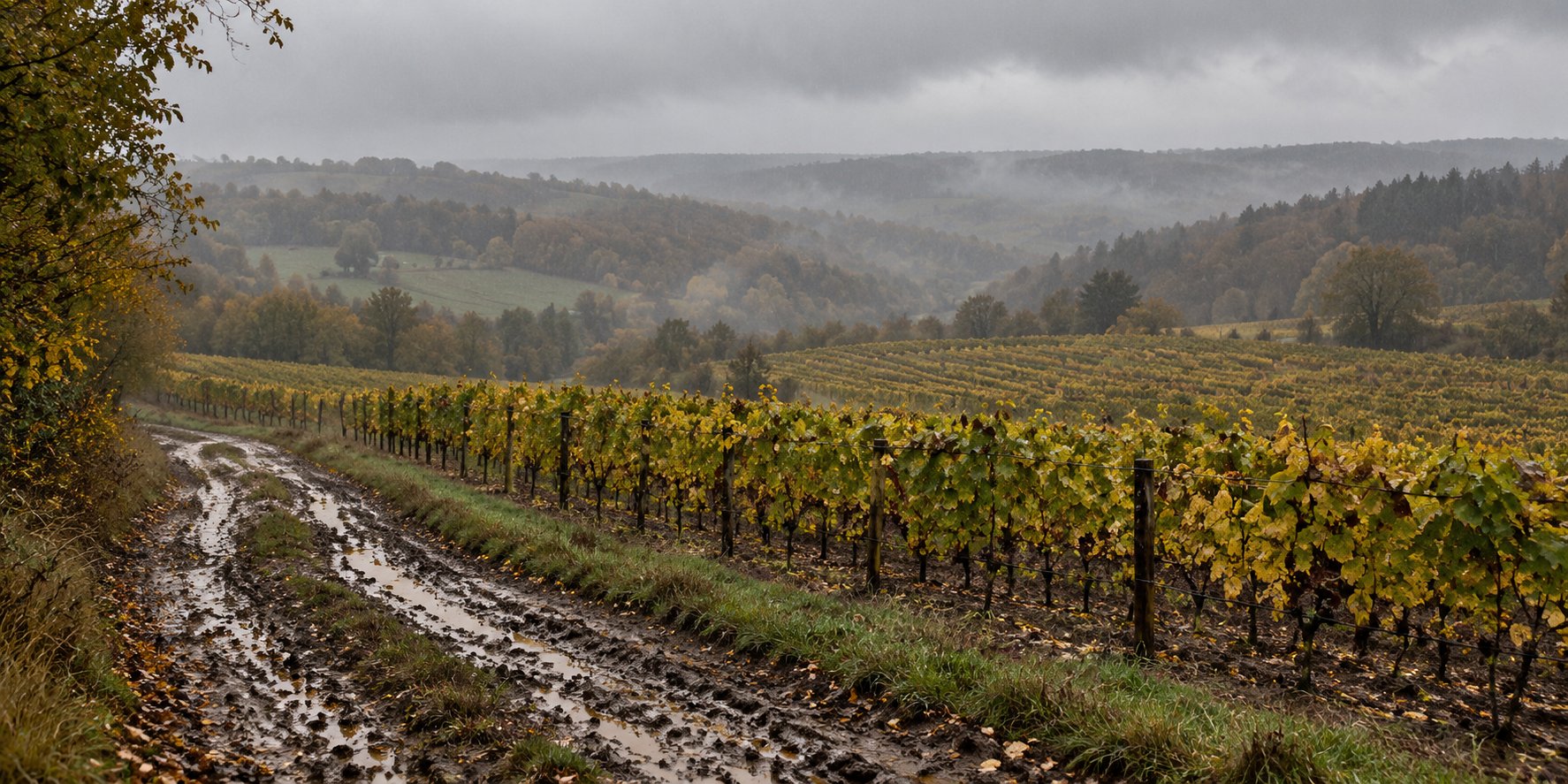
It was raining when we reached the Trzebnica Hills, north of Wrocław, and it rained for most of the visit. Lower Silesia has the mildest climate in Poland, which in autumn means wet rather than cold. The region sits around Wrocław and the Oder, between about 50.5 and 51.5 degrees north, with 550 to 650 millimetres of rain a year and a growing season of 200 to 230 days. The weather comes from the west, and it brings the ocean with it.
From the hills the road runs down to the Oder and across the valley floor, where vines grow on sandy clay over loess. These are the rounder, earlier wines of the region. South-east of Wrocław the ground turns calcareous, and the wines turn with it. We were heading the other way, south-west, toward the Sudeten foothills, where the granite comes up.
The estate we visited sits in those foothills. Its rows run down a slope to a stream at the bottom, and the grower walked us to the water before showing us a single vine. On a still spring night cold air slides downhill and pools in the lowest ground. A stream at the foot of the slope gives it somewhere to go. Spring frost is one of the two defining risks of Polish viticulture, along with winter cold, and a slope that drains its cold air away matters more here than one that faces perfectly south.
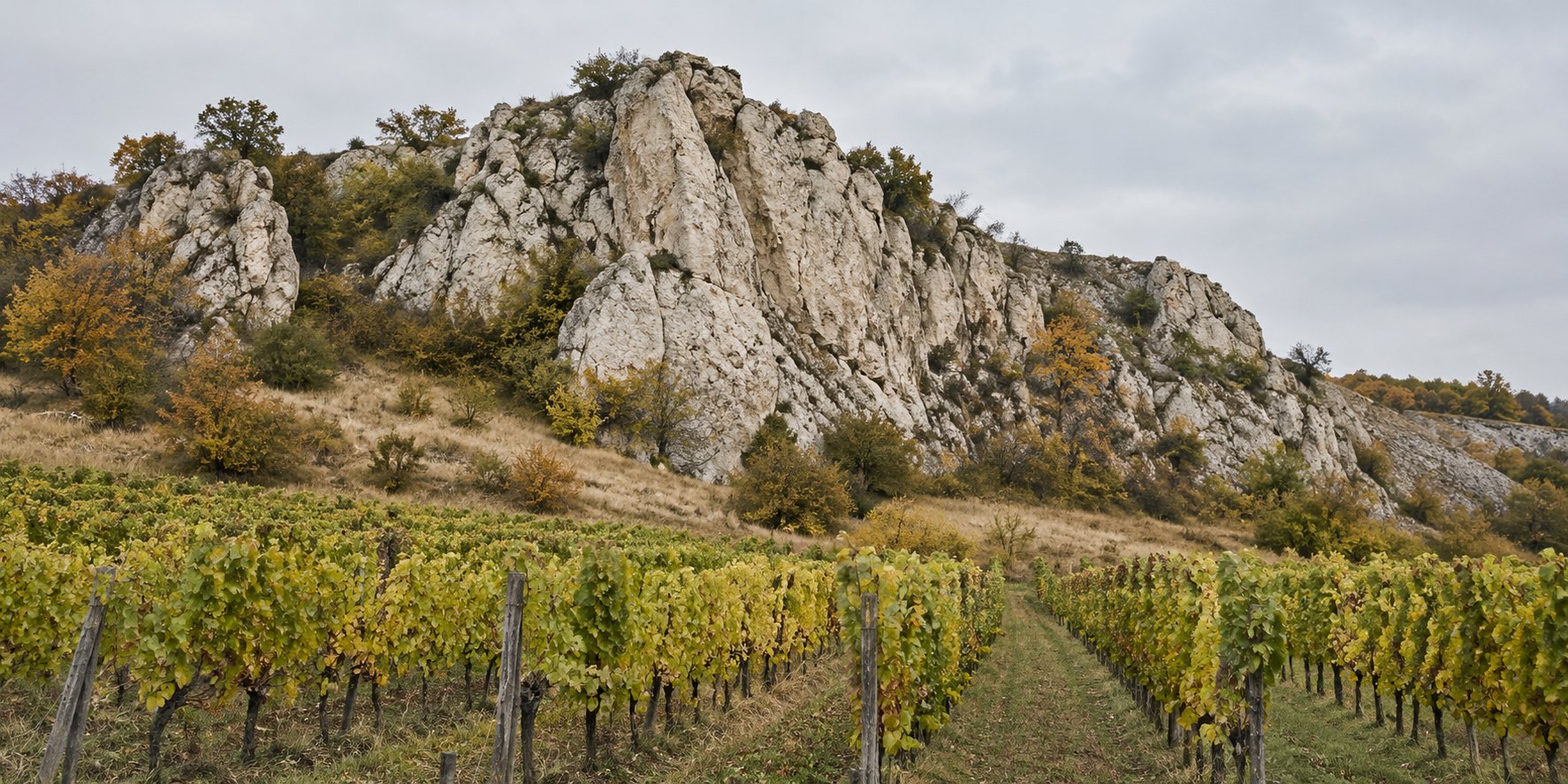
Under the vines is granite, thin and quick to drain, weathered at the surface into a coarse grit that crumbles in the hand. Granite stresses a vine. It gives lean fruit, firm acidity and sometimes a smoky or flinty edge, and wines that last on structure rather than weight. In the Sudeten foothills Riesling and Pinot Noir hold their acidity, and the estate grows both. We tasted the Pinot first: pale, red cherry, raspberry, a line of acidity, the granite showing as a kind of restraint.
It also grows a red Riesling. Roter Riesling is a red-berried form of Riesling, thought to come from the Rhine valley. The skins colour at harvest, but it is made as a white wine. We tasted it from tank. It had the line of Riesling, the high acidity and the precise, citrus-edged fruit, with something slightly broader and more aromatic around it. On granite it was taut. It is a small grape in a small region, and it was one of the reasons we came. We would like to see more of it, and we suspect we are not the only ones.
The rest of Lower Silesia's list is broad. Pinot Noir and Chardonnay do best here. Riesling grows alongside them, with Gewürztraminer, and the PIWI varieties Solaris, Johanniter and Regent. The Bystrzyca and the Odra cut through the region; the Trzebnica Hills close it to the north; the Sudeten foothills rise in the south-west. Between them sits most of the range of Polish soil in a single region: granite, loess, sandy clay and calcareous ground.
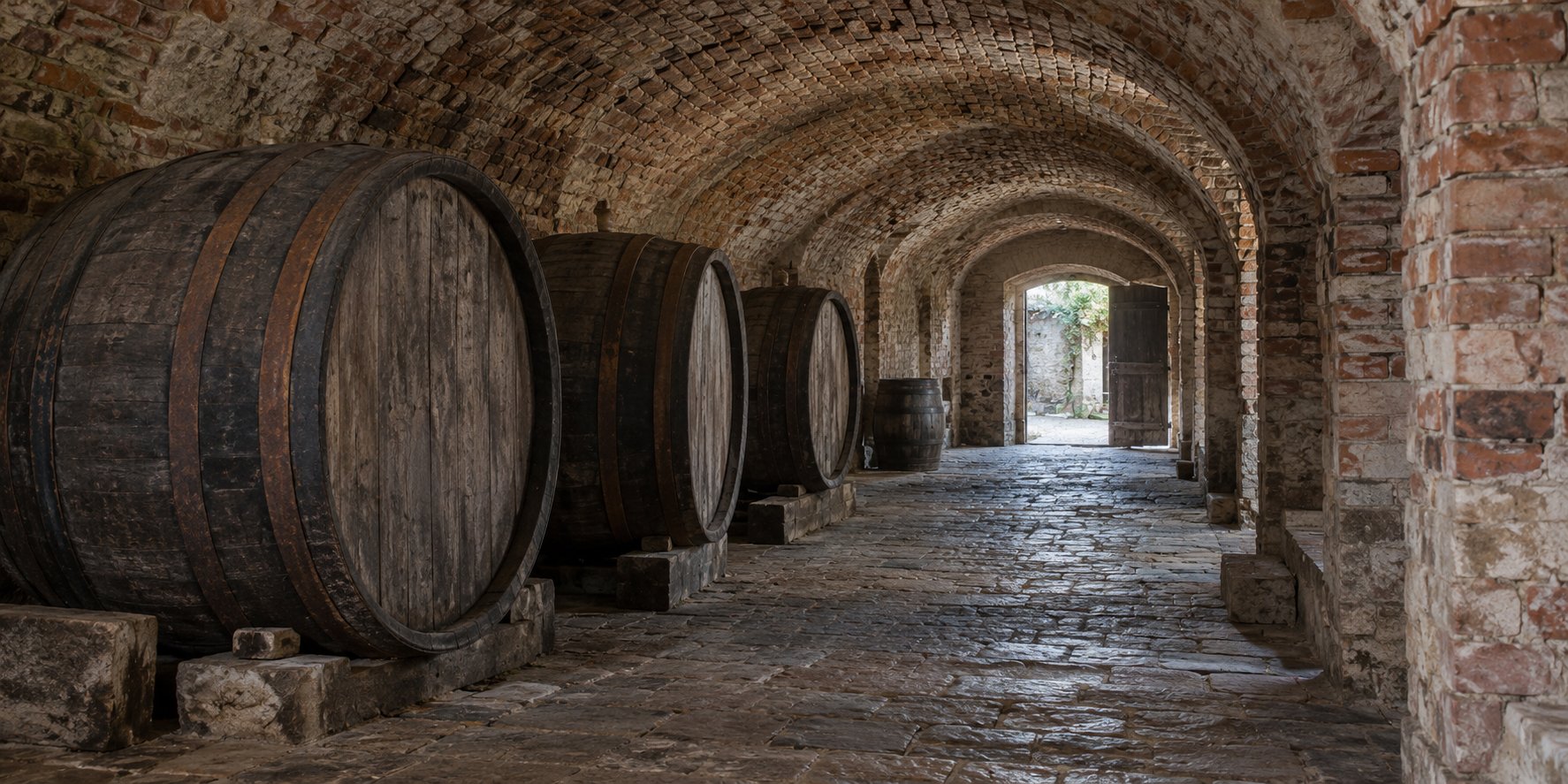
Lower Silesia is also where Poland's first appellation is being written. The PDO application is in the EU process. Sitting in the cellar with the grower, we talked about it for longer than we talked about any wine. What struck us was how practical the questions are: which grapes, which slopes, which methods, and where exactly the line on the map goes. An appellation is a description of a place, agreed in advance. Here they are still agreeing it.
We left in the rain, down past the stream and back toward the Oder. Granite, a stream, a red Riesling, and the mildest weather in Poland: that is the visit in a line. The rest is in the glass, and in the samples we carried home in the boot.